
September 3, 2026 · 2 min read
Plant vs. Animal Protein: Key Differences for Your Body
Discover how plant and animal proteins impact your health differently.
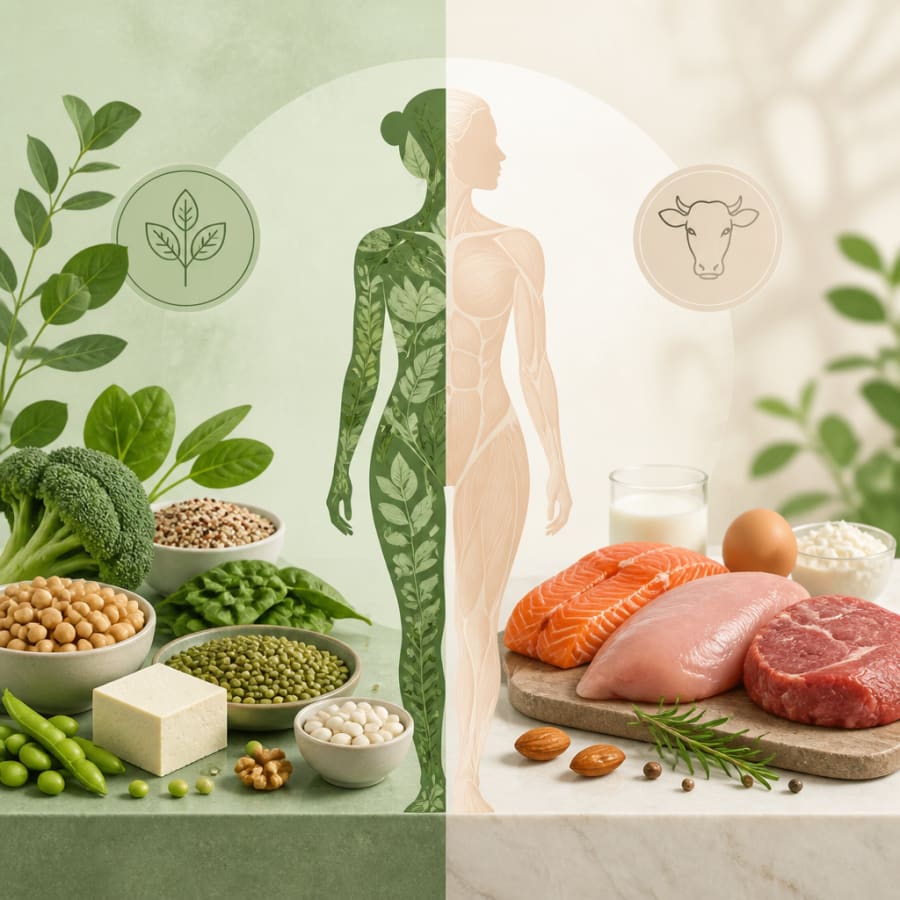
Protein is essential for muscle repair, immune function, and overall health. Animal proteins, such as meat and dairy, are considered complete proteins, meaning they contain all nine essential amino acids your body can't produce on its own. In contrast, most plant proteins are incomplete, lacking one or more of these amino acids. However, combining different plant sources can provide a full profile of essential amino acids.
A study published in the 'American Journal of Clinical Nutrition' found that individuals consuming plant-based diets had a 25% lower risk of developing heart disease compared to those who primarily consumed animal proteins. This difference is largely attributed to the higher fiber and lower saturated fat content in plant foods, which contribute to better cardiovascular health.
Protein requirements can vary by individual. The Recommended Dietary Allowance (RDA) for protein is 0.8 grams per kilogram of body weight, which translates to about 56 grams per day for an average adult male and 46 grams for an average adult female. If you're opting for plant proteins, consider foods like lentils, quinoa, and chickpeas to meet your protein needs while also enriching your diet with fiber and essential nutrients.
To make the most of your protein sources, aim for a balanced diet that includes both plant and animal proteins. If you're leaning towards plant-based options, mix various protein sources—like beans with rice or peanut butter on whole grain bread—to ensure you're getting a complete amino acid profile.
Share:
More notes

Cholesterol Myths vs. Science: What You Really Need to Know
September 29, 2026

Simple Steps to Start Your Anti-Inflammatory Diet Today
September 23, 2026

Hidden Sodium: Everyday Foods Surprising Your Taste Buds
September 22, 2026

Unlocking the Perfect Breakfast: What Science Really Says
September 21, 2026

Artificial Food Dyes: Understanding the Real Concerns
September 20, 2026
Boost Your Gut Health with Fermented Foods: Evidence Inside
September 19, 2026
How Poor Sleep Quietly Sabotages Your Metabolism
September 18, 2026

Vitamin D Deficiency: The Hidden Gap in Adult Health
September 17, 2026
We use essential cookies to make the app work, and analytics cookies (Google Analytics) only if you accept them. Cookie policy