
September 8, 2026 · 2 min read
Late-Night Eating and Anxiety: What's Actually Happening?
Discover how late-night eating can trigger anxiety and disrupt sleep.
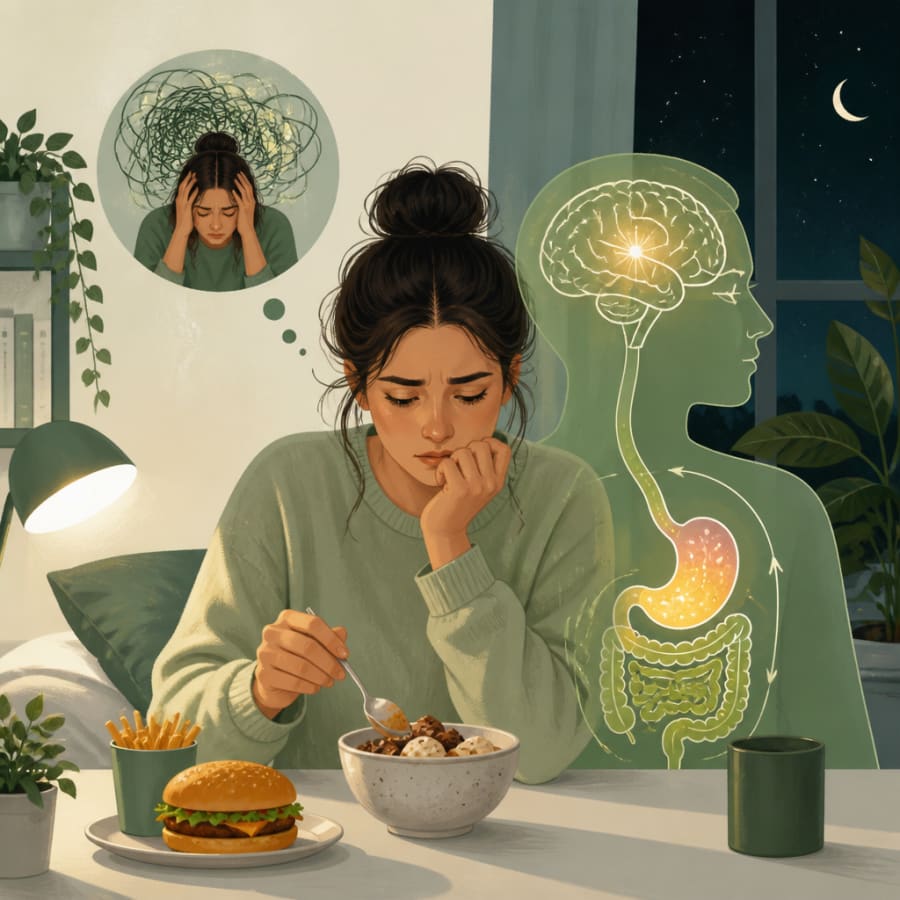
Late-night eating is more common than you might think, with studies showing that nearly 30% of adults engage in this habit regularly. This behavior can lead to disrupted sleep patterns, as consuming food close to bedtime can increase the likelihood of insomnia and impact the quality of sleep. Research indicates that poor sleep is closely linked to higher levels of anxiety, creating a vicious cycle that can be hard to break.
Anxiety can also drive late-night snacking, with emotional eaters often turning to food for comfort in times of stress. A survey conducted by the American Psychological Association found that 38% of Americans reported overeating or eating unhealthy foods due to stress. This late-night habit can exacerbate feelings of anxiety the following day, leading to a detrimental cycle of poor eating and heightened stress levels.
Certain food choices can further contribute to anxiety. High sugar and processed foods can lead to spikes and crashes in blood sugar, which are known to affect mood and anxiety levels. A study published in the journal Nutritional Neuroscience found that diets high in refined sugars were associated with increased rates of anxiety and depression in participants.
To mitigate the effects of late-night eating on anxiety, consider establishing a cut-off time for meals—ideally, two to three hours before bedtime. Focus on lighter, healthier snacks if you're hungry, such as fruits or nuts. Additionally, practicing mindfulness or relaxation techniques before bed can help reduce anxiety and improve sleep quality.
Share:
More notes

Cholesterol Myths vs. Science: What You Really Need to Know
September 29, 2026

Simple Steps to Start Your Anti-Inflammatory Diet Today
September 23, 2026

Hidden Sodium: Everyday Foods Surprising Your Taste Buds
September 22, 2026

Unlocking the Perfect Breakfast: What Science Really Says
September 21, 2026

Artificial Food Dyes: Understanding the Real Concerns
September 20, 2026

Boost Your Gut Health with Fermented Foods: Evidence Inside
September 19, 2026

How Poor Sleep Quietly Sabotages Your Metabolism
September 18, 2026

Vitamin D Deficiency: The Hidden Gap in Adult Health
September 17, 2026
We use essential cookies to make the app work, and analytics cookies (Google Analytics) only if you accept them. Cookie policy