
September 12, 2026 · 2 min read
Mastering Nutrition Labels: Outsmarting Marketing Tricks
Learn how to decode nutrition labels and avoid misleading claims.
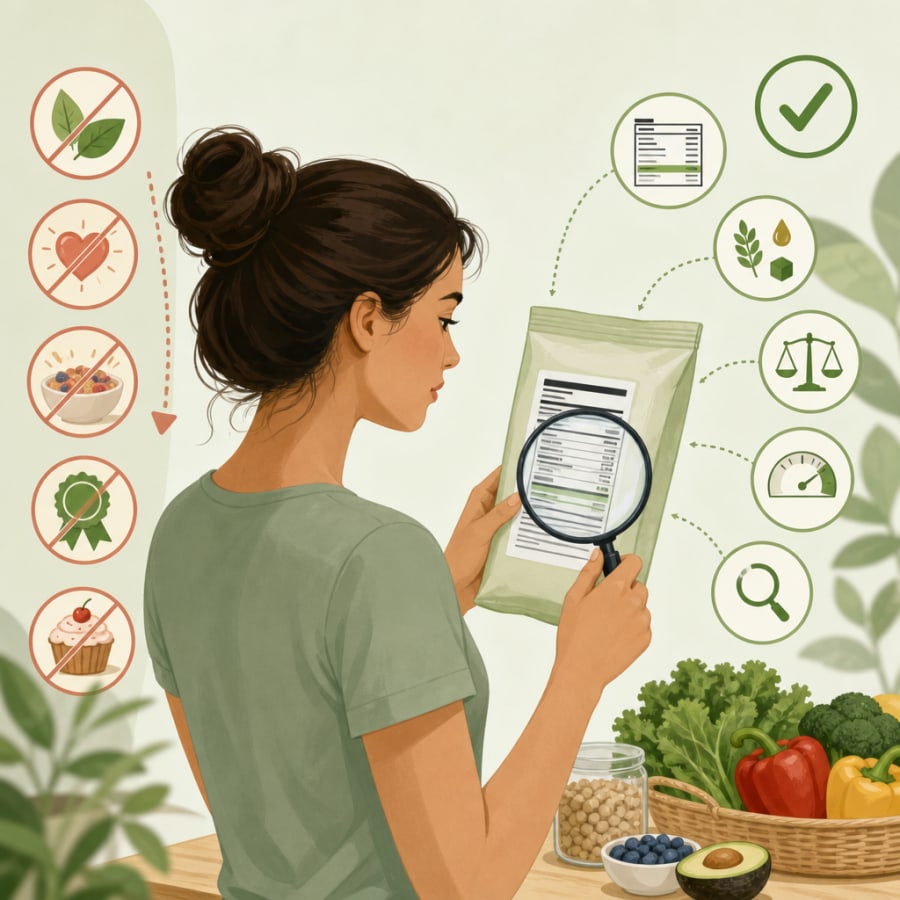
Nutrition labels are designed to provide essential information about food products, but marketing tricks can obscure the truth. For instance, many products boast 'low fat' or 'sugar-free' claims, yet they may be loaded with sodium or artificial ingredients that compromise health. According to a study published in the Journal of Nutrition, over 60% of consumers are misled by these marketing strategies.
Understanding serving sizes is crucial. A product that appears low in calories might actually contain multiple servings, which can unexpectedly double or triple your calorie intake. For example, a snack bag labeled as 150 calories might actually provide 450 calories if it contains three servings. Always check the serving size at the top of the label before making a decision.
Pay attention to the order of ingredients as well. Ingredients are listed in descending order by weight, meaning the first few listed are the most prominent in the product. If sugar or refined grains are among the first three ingredients, the product is likely not a healthy choice. The American Heart Association recommends limiting added sugars to no more than 6% of daily caloric intake, which translates to about 100 calories per day for women and 150 for men.
To make informed choices, take a moment to compare products directly. Look for items with simple ingredients and fewer additives. Utilize apps or websites that help track nutrient intake, ensuring that what you consume aligns with your health goals. Remember, knowledge is your best tool against deceptive marketing.
Share:
More notes

Cholesterol Myths vs. Science: What You Really Need to Know
September 29, 2026

Simple Steps to Start Your Anti-Inflammatory Diet Today
September 23, 2026

Hidden Sodium: Everyday Foods Surprising Your Taste Buds
September 22, 2026

Unlocking the Perfect Breakfast: What Science Really Says
September 21, 2026

Artificial Food Dyes: Understanding the Real Concerns
September 20, 2026

Boost Your Gut Health with Fermented Foods: Evidence Inside
September 19, 2026

How Poor Sleep Quietly Sabotages Your Metabolism
September 18, 2026

Vitamin D Deficiency: The Hidden Gap in Adult Health
September 17, 2026
We use essential cookies to make the app work, and analytics cookies (Google Analytics) only if you accept them. Cookie policy