
October 1, 2026 · 2 min read
Chronic Stress: The Hidden Driver of Weight Gain
Discover how stress affects your weight and learn practical tips to combat it.
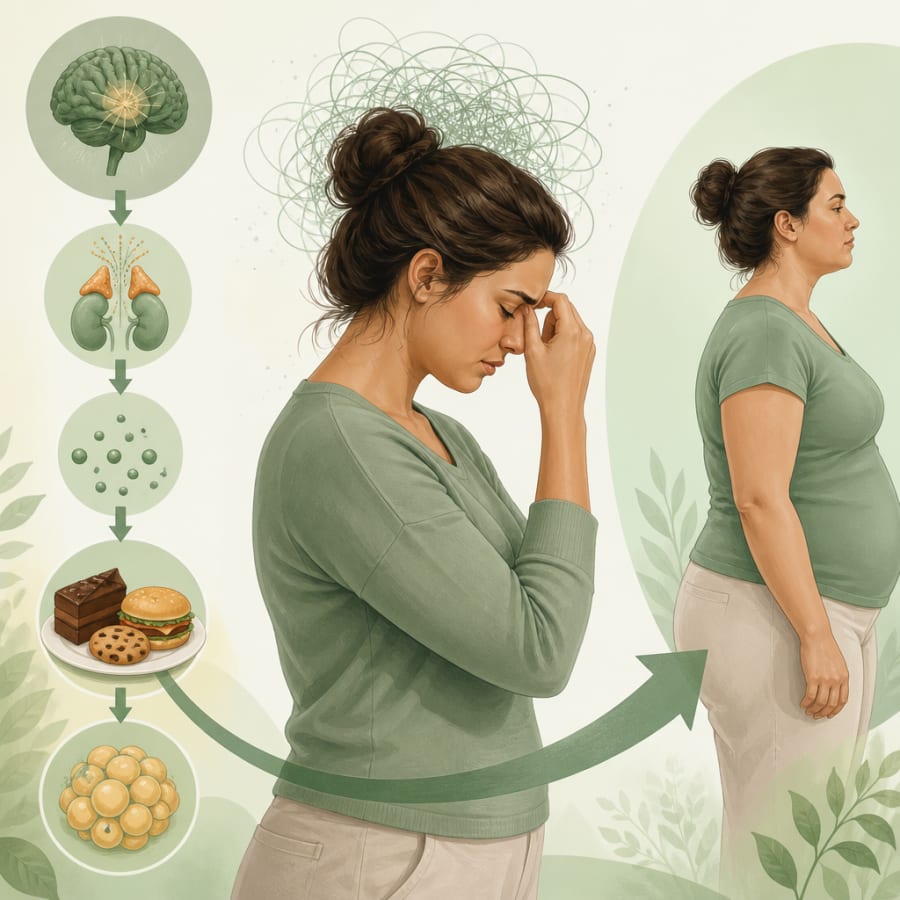
Chronic stress triggers the release of cortisol, a hormone known to increase appetite and cravings for sugary foods. A study published in the journal 'Obesity' found that individuals with high cortisol levels were 30% more likely to gain weight over a five-year period.
Moreover, stress can lead to emotional eating, where individuals consume high-calorie comfort foods as a coping mechanism. Research indicates that 40% of stressed individuals report increased cravings for unhealthy snacks.
In addition to hormonal changes, chronic stress can disrupt sleep patterns, leading to fatigue and lower energy levels. According to the National Sleep Foundation, insufficient sleep can result in weight gain due to increased ghrelin levels, the hormone that stimulates appetite.
To combat stress-related weight gain, consider adopting mindfulness practices such as meditation or yoga. These methods have been shown to lower cortisol levels and reduce stress, helping you regain control over your eating habits.
Share:
More notes

Hydration and Workout Performance: The Common Mistake You Make
October 25, 2026

Intermittent Fasting: What the Evidence Actually Shows
October 24, 2026

Boost Your Gut Health: Simple Diet Changes That Work
October 23, 2026

How Much Protein You Actually Need — And Where to Get It
October 22, 2026

Why Yo-Yo Dieting Backfires: The Science Behind Weight Cycling
October 21, 2026

Insulin Resistance: Early Warning Signs You Can't Afford to Ignore
October 20, 2026

The Heart-Healthy Fats You Need for Optimal Wellness
October 19, 2026

Not All Carbs Are the Enemy: How to Identify the Good Ones
October 15, 2026
We use essential cookies to make the app work, and analytics cookies (Google Analytics) only if you accept them. Cookie policy