
October 7, 2026 · 2 min read
Probiotics vs. Prebiotics: Understanding the Key Differences
Unlock the benefits of gut health by knowing how probiotics and prebiotics differ.
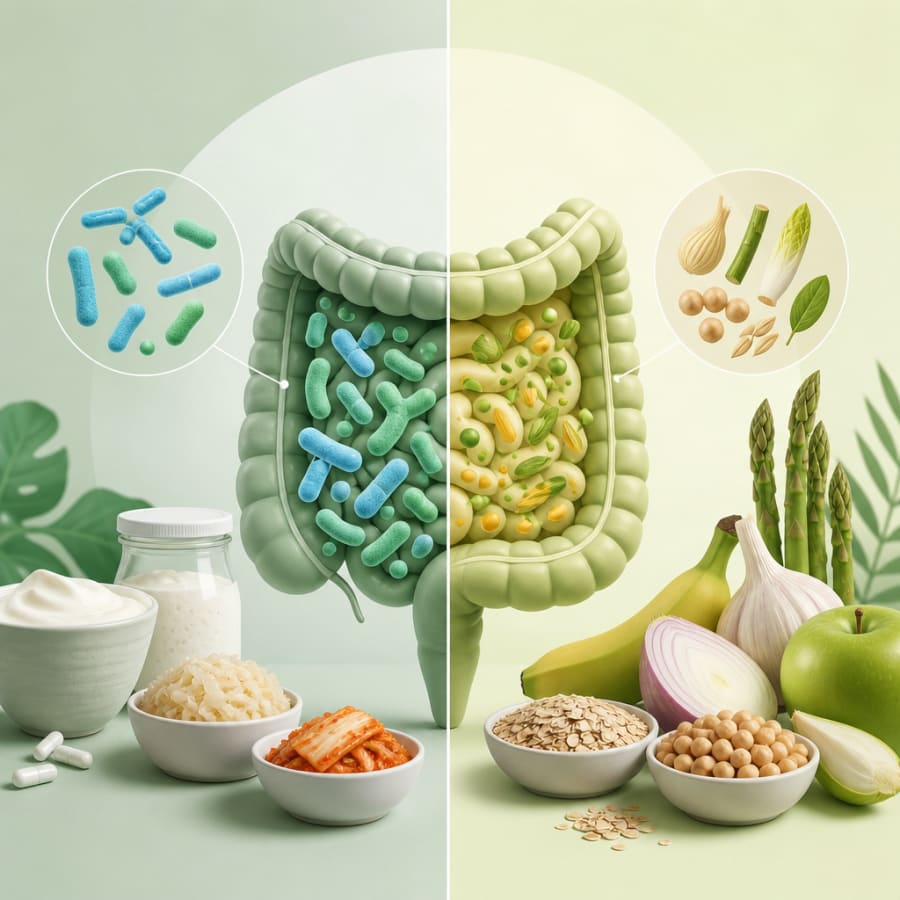
Probiotics are live bacteria that provide health benefits when consumed in adequate amounts. According to a 2017 study published in the journal Gastroenterology, probiotics can help alleviate symptoms of irritable bowel syndrome (IBS) in about 60% of patients. They are commonly found in fermented foods like yogurt, kefir, and sauerkraut.
On the other hand, prebiotics are non-digestible fibers that feed the beneficial bacteria in your gut. A review in the journal Nutrients found that prebiotics can increase levels of beneficial bacteria like Bifidobacteria and Lactobacilli, thus improving gut health. Foods rich in prebiotics include garlic, onions, bananas, and asparagus, which can help in maintaining a healthy microbiome.
While both are crucial for gut health, the key difference lies in their function: probiotics are the good bacteria, while prebiotics are the food that sustains these bacteria. This symbiotic relationship enhances digestion, boosts immunity, and can even impact mental health, as demonstrated in a study from the American Journal of Clinical Nutrition, which highlighted the gut-brain axis.
To harness the benefits of both, include a combination of probiotics and prebiotics in your diet. A daily serving of yogurt paired with a banana can ensure you’re feeding your gut the good bacteria it needs to thrive, leading to improved overall health.
Share:
More notes

Hydration and Workout Performance: The Common Mistake You Make
October 25, 2026

Intermittent Fasting: What the Evidence Actually Shows
October 24, 2026
Boost Your Gut Health: Simple Diet Changes That Work
October 23, 2026

How Much Protein You Actually Need — And Where to Get It
October 22, 2026

Why Yo-Yo Dieting Backfires: The Science Behind Weight Cycling
October 21, 2026

Insulin Resistance: Early Warning Signs You Can't Afford to Ignore
October 20, 2026
The Heart-Healthy Fats You Need for Optimal Wellness
October 19, 2026

Not All Carbs Are the Enemy: How to Identify the Good Ones
October 15, 2026
We use essential cookies to make the app work, and analytics cookies (Google Analytics) only if you accept them. Cookie policy